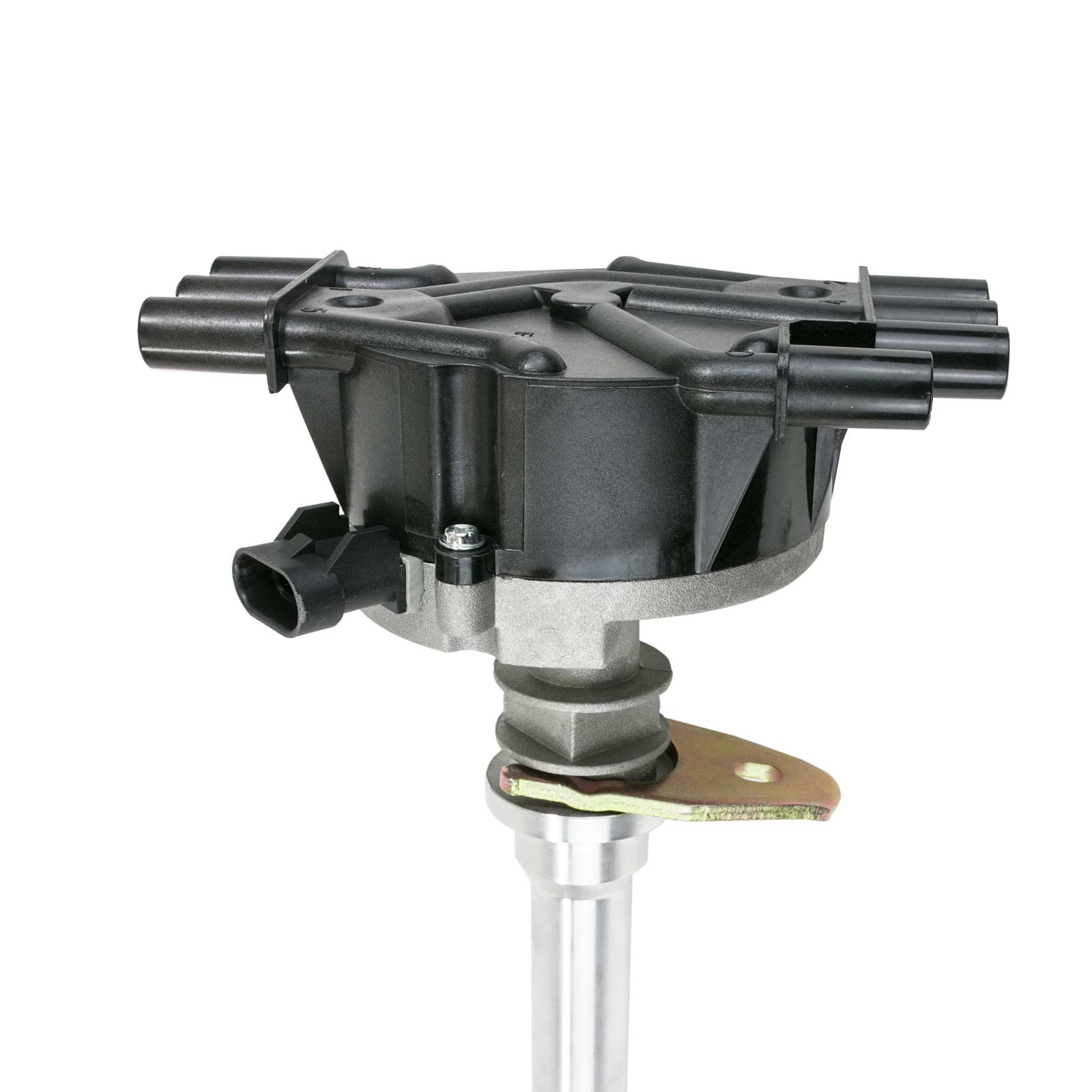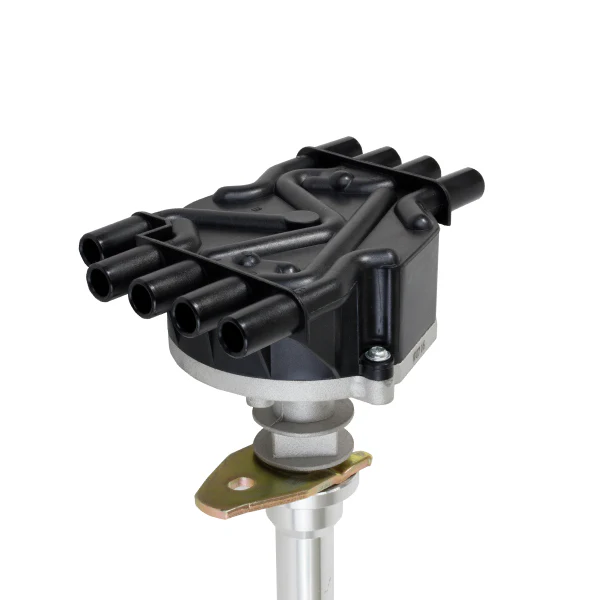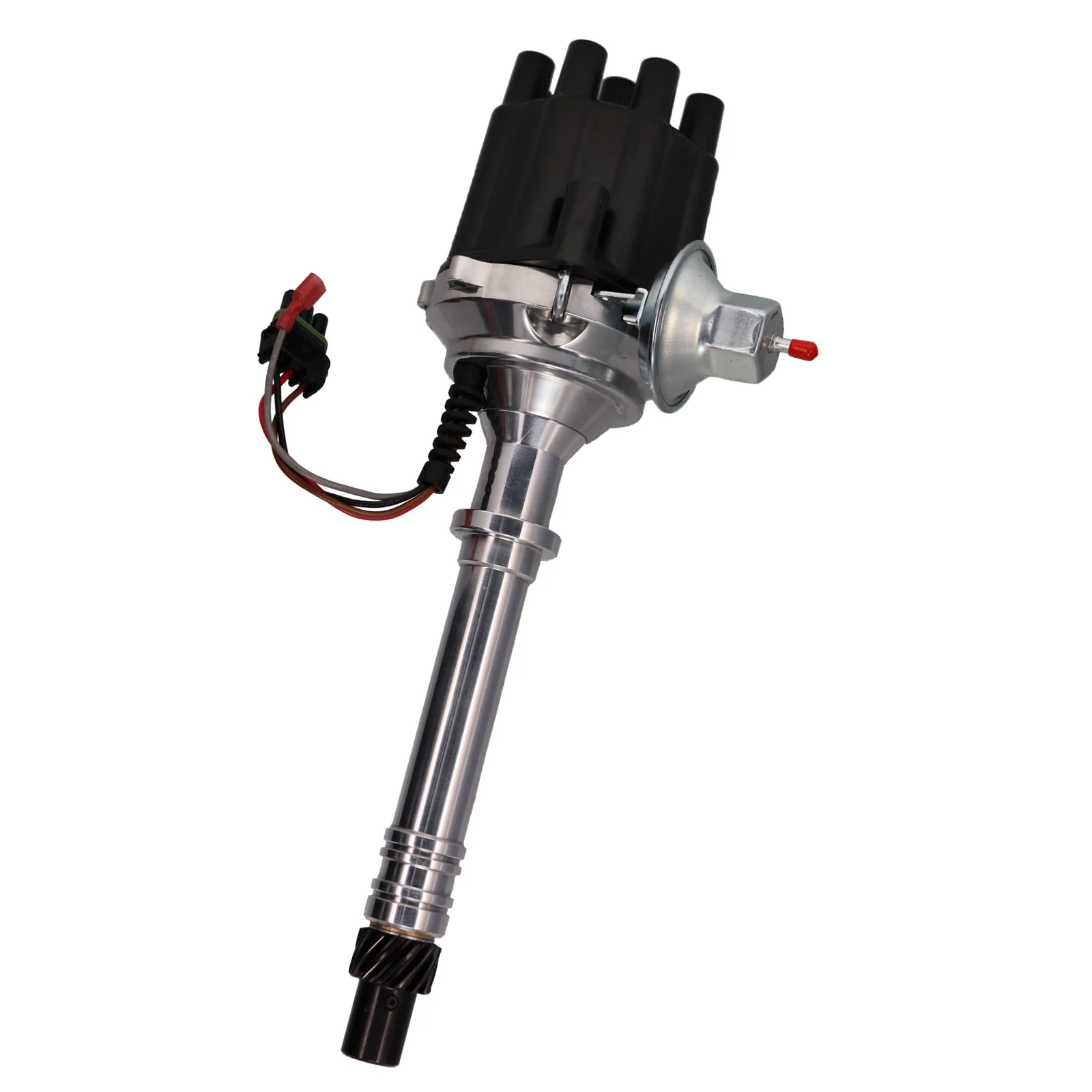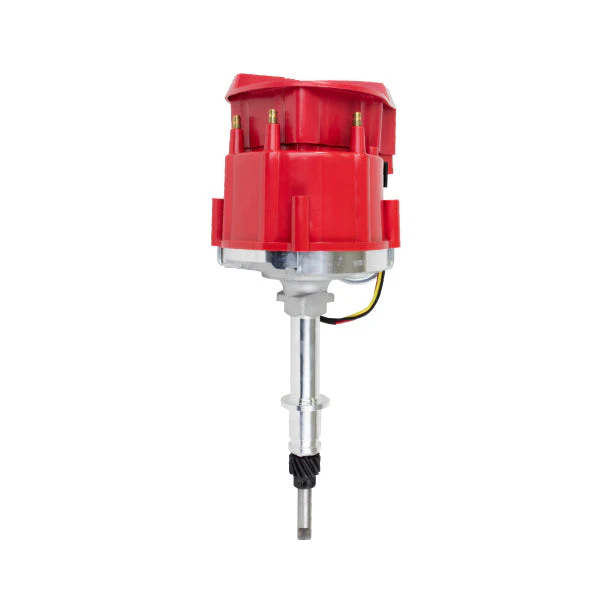

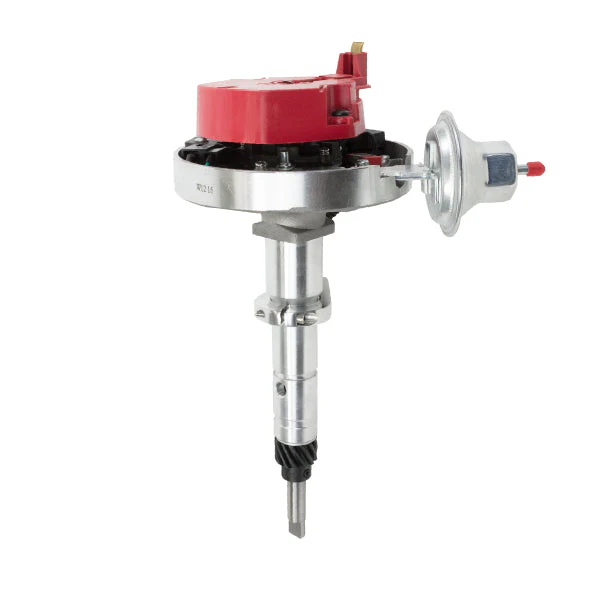
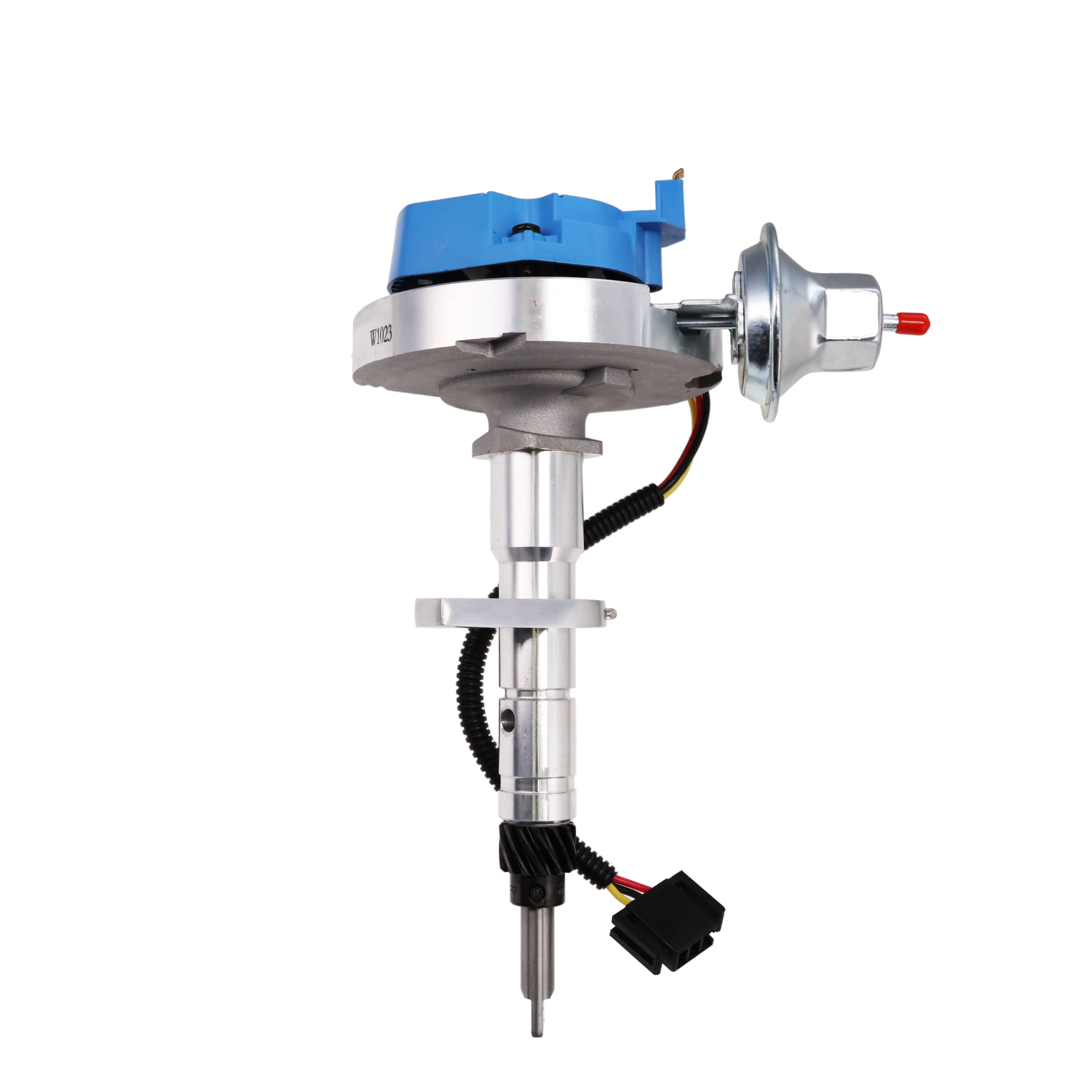
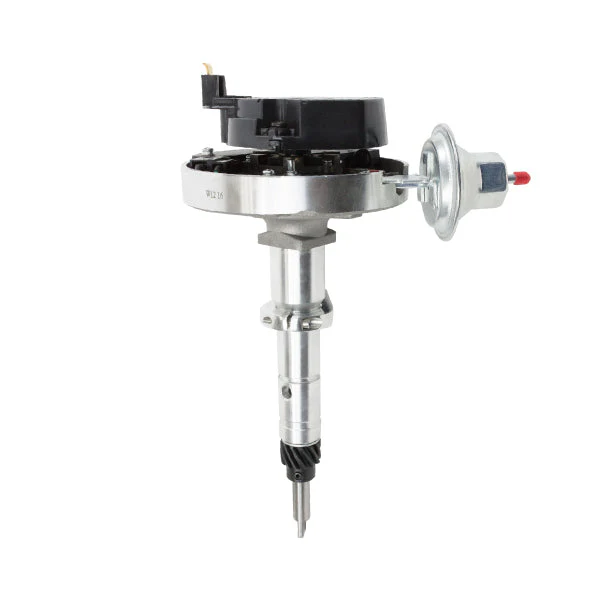
Chevy 194-235 Early L6 HEI Distributor
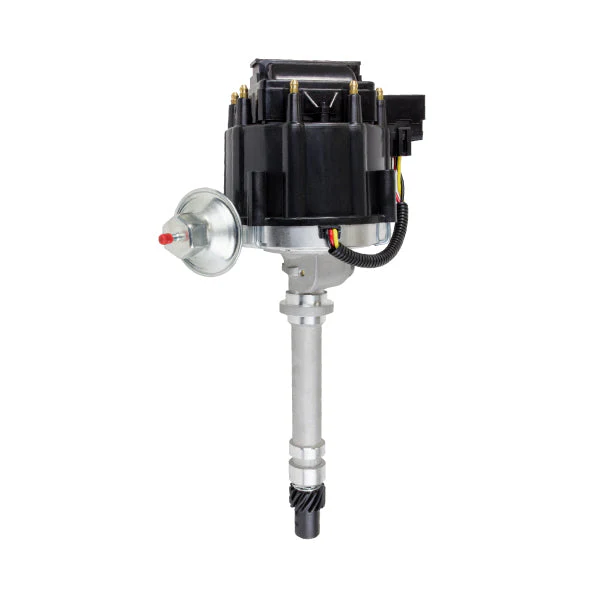
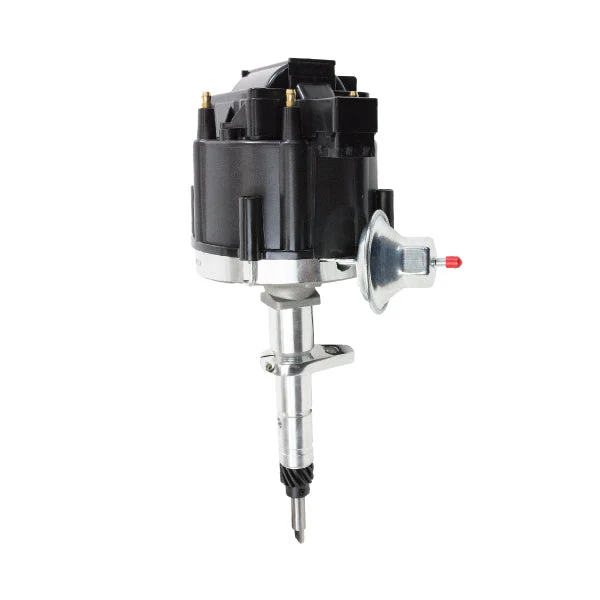
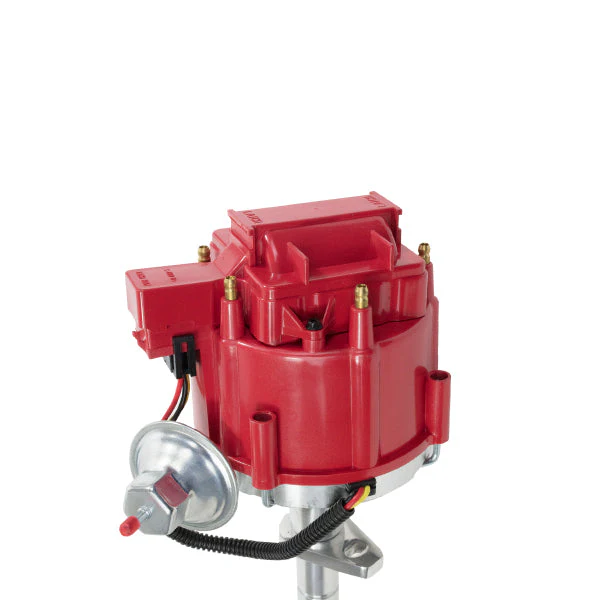
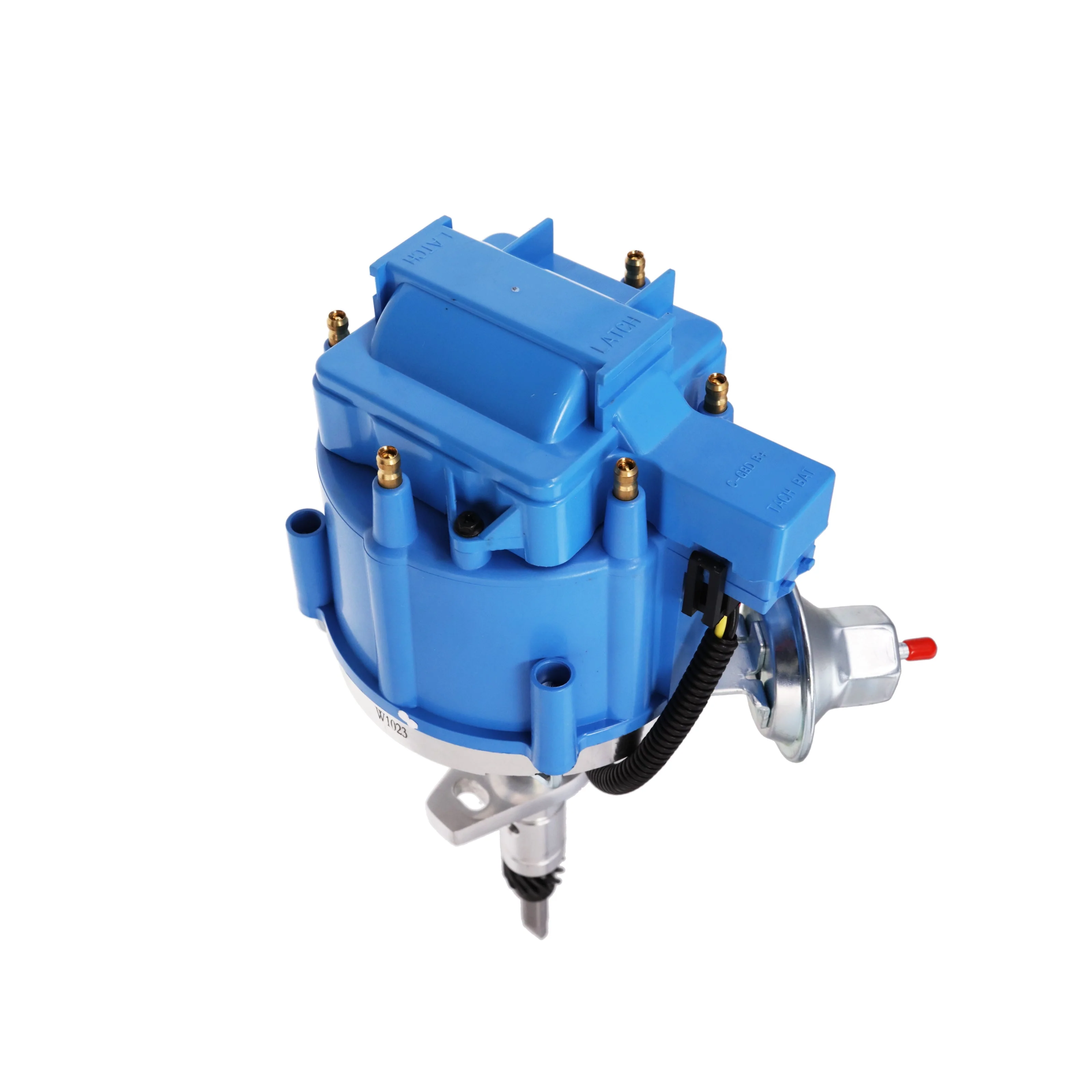
The TSP HEI Distributor for the Chevy Stovebolt inline-six is a self-contained large-cap HEI ignition upgrade for the Chevrolet 194 CID (3.2L), 216 CID (3.5L), 235 CID (3.9L), and 261 CID (4.3L) engines used in 1962 and earlier Chevrolet car and truck applications. The integrated HEI design combines the ignition coil, ignition module, cap, and rotor into a single unit, connecting to a single 12-volt source with no external coil, ignition box, or condenser required.
6-volt vehicle owners — two steps required before installation. Many Chevrolet vehicles built before the mid-1950s left the factory with 6-volt electrical systems. This distributor requires a 12-volt electrical system with a charging alternator. Before installing this distributor on a 6-volt vehicle, you must complete two steps: (1) upgrade the electrical system to 12-volt with a charging alternator, replacing the generator if present, and (2) remove or bypass any ballast resistor in the ignition circuit — ballast resistors were commonly installed during 6V-to-12V conversions to protect points-style ignition, but the HEI system does not use one and will not function correctly with a ballast resistor in the circuit. After both steps are completed, the vehicle applications on this listing are generally compatible with this distributor.
This distributor fits the early Chevy inline-six family only — 1962 and earlier. It is not compatible with the later GM inline-six engines introduced in 1963 and beyond — including the 230 CID, 250 CID, and 292 CID. If your engine is a 230, 250, or 292, a different distributor is required.
The Chevy Stovebolt inline-six powered the full range of Chevrolet cars and trucks from the late 1920s through 1962 — across multiple displacement evolutions, the engine family remained fundamentally consistent in architecture. The 216 CID (sometimes listed as 216.5 or 217), the 235 CID (sometimes listed as 235.5 or 236), and the 261 CID truck-specific engine are the most commonly restored and modified displacements. Whether refreshing a 1950s Bel Air, upgrading a Task Force or Advance Design pickup, or building a vintage Stovebolt-powered hot rod, this HEI distributor eliminates points, condenser, and external coil wiring in a single installation.
The 65,000-volt internal HEI coil delivers substantially stronger spark than a factory points-style distributor, supporting easier cold starts, cleaner idle quality, and more consistent ignition performance across the RPM range. A magnetic pickup trigger requires no routine maintenance. Both mechanical and vacuum advance are included, with a vacuum advance adjustment tool shipped with the distributor.
The Chevy Stovebolt Inline-Six — Understanding the Engine Family
The Chevrolet inline-six nickname "Stovebolt" refers to the early OHV inline-six family produced from 1929 through 1962 in various displacements. The engine went through several displacement evolutions during this period — from the early 194 CID through the 216 CID (also referred to as 216.5 or 217), the 235 CID Blue Flame Six (also referred to as 235.5 or 236), and the 261 CID used primarily in trucks. All four share compatible distributor architecture. This is a completely different engine from the later GM inline-six (230/250/292 CID) introduced in 1963 — those engines require a different distributor.
6-Volt to 12-Volt Conversion — What You Need to Do First
A significant portion of vehicles equipped with the early Chevy inline-six were originally built with 6-volt electrical systems — this includes most Chevrolets built before 1953. This HEI distributor requires a 12-volt electrical system with a charging alternator. If your vehicle has a 6-volt system or was converted from 6-volt to 12-volt at some point, here is what you need before installing this distributor:
Step 1 — Upgrade to 12-volt: Install a 12-volt battery and replace the generator with a 12-volt alternator. All electrical components must be compatible with 12-volt operation.
Step 2 — Remove or bypass the ballast resistor: Many 6V-to-12V conversions included a ballast resistor in the ignition circuit to reduce voltage to the points-style distributor. The HEI system does not use a ballast resistor and the circuit must be bypassed or the resistor removed before installing this distributor. Leaving the ballast resistor in place will prevent the HEI from functioning correctly.
Once both steps are complete, the vehicle applications on this listing are generally compatible with this distributor.
Performance Benefit
The 65,000-volt internal HEI coil fires spark plugs more consistently than a factory points setup across the full RPM range. Stronger spark translates to easier cold starts, cleaner idle quality, and improved throttle response — particularly meaningful on vintage Stovebolt applications where original ignition components may be decades old. The magnetic pickup trigger holds timing accurately without the maintenance cycle required by points-based ignition. Both mechanical and vacuum advance are included, and the vacuum advance adjustment tool allows the curve to be tuned for your specific combination.
COMPATIBLE WITH
CHEVROLET INLINE 6 (“STOVEBOLT”)
• 3.2L / 194 in³
• 3.5L / 216 in³
• 3.9L / 235 in³
• 4.3L / 261 in³
NOTES
• Fits Chevrolet Stovebolt inline-six engines (194, 216, 235, and 261) used in 1962 and earlier applications.
• Not compatible with later GM inline-six engines (230, 250, 292 Turbo-Thrift).
• The 261 was a truck-only engine in the US; Canadian Pontiac passenger cars also used the 261 from 1955–1962.
• Designed for carbureted ignition systems only.
Vehicles with 6-volt electrical systems (pre-1953 passenger cars and pre-1956 trucks) must upgrade to a 12-volt battery and remove or bypass the ballast resistor before installation.
• Distributor gear is most compatible with cast iron hydraulic or solid flat tappet camshafts; consult cam manufacturer for recommended gear material.
COMMON VEHICLE APPLICATIONS
Chevrolet Passenger Cars — 150 / 210 / Bel Air (216, 1937–1952; 235, 1953–1957)
Chevrolet Corvette (235 "Blue Flame", 1953–1955)
Chevrolet Impala / Biscayne / Bel Air (235, 1958–1962)
Chevrolet Advance Design Trucks (216/235, 1947–1953)
Chevrolet Task Force Trucks (235/261, 1955–1959)
Chevrolet C10 / C20 Trucks (235/261, 1960–1962)
GMC Light-Duty Trucks (216/235, 1947–1954)
SPECIFICATIONS
Trigger Type: Magnetic
Advance Type: Mechanical And Vacuum
Color: Available in Red, Blue, Black
Terminal Gender: Male
Mechanical Tach Drive: No
Slip Collar: No
Coil Included: Yes
Coil Type: Internal
Coil Output: 65000 V
Gear Material: Steel
Housing Material: Machined Aluminum
Ignition Box Required: No
Marine Use: No
Cylinders: 6
Vacuum Advance Adjustment Tool: Included
Installation Instructions: Included
Original: $190.12
-65%$190.12
$66.54Product Information
Product Information
Shipping & Returns
Shipping & Returns
Description
The TSP HEI Distributor for the Chevy Stovebolt inline-six is a self-contained large-cap HEI ignition upgrade for the Chevrolet 194 CID (3.2L), 216 CID (3.5L), 235 CID (3.9L), and 261 CID (4.3L) engines used in 1962 and earlier Chevrolet car and truck applications. The integrated HEI design combines the ignition coil, ignition module, cap, and rotor into a single unit, connecting to a single 12-volt source with no external coil, ignition box, or condenser required.
6-volt vehicle owners — two steps required before installation. Many Chevrolet vehicles built before the mid-1950s left the factory with 6-volt electrical systems. This distributor requires a 12-volt electrical system with a charging alternator. Before installing this distributor on a 6-volt vehicle, you must complete two steps: (1) upgrade the electrical system to 12-volt with a charging alternator, replacing the generator if present, and (2) remove or bypass any ballast resistor in the ignition circuit — ballast resistors were commonly installed during 6V-to-12V conversions to protect points-style ignition, but the HEI system does not use one and will not function correctly with a ballast resistor in the circuit. After both steps are completed, the vehicle applications on this listing are generally compatible with this distributor.
This distributor fits the early Chevy inline-six family only — 1962 and earlier. It is not compatible with the later GM inline-six engines introduced in 1963 and beyond — including the 230 CID, 250 CID, and 292 CID. If your engine is a 230, 250, or 292, a different distributor is required.
The Chevy Stovebolt inline-six powered the full range of Chevrolet cars and trucks from the late 1920s through 1962 — across multiple displacement evolutions, the engine family remained fundamentally consistent in architecture. The 216 CID (sometimes listed as 216.5 or 217), the 235 CID (sometimes listed as 235.5 or 236), and the 261 CID truck-specific engine are the most commonly restored and modified displacements. Whether refreshing a 1950s Bel Air, upgrading a Task Force or Advance Design pickup, or building a vintage Stovebolt-powered hot rod, this HEI distributor eliminates points, condenser, and external coil wiring in a single installation.
The 65,000-volt internal HEI coil delivers substantially stronger spark than a factory points-style distributor, supporting easier cold starts, cleaner idle quality, and more consistent ignition performance across the RPM range. A magnetic pickup trigger requires no routine maintenance. Both mechanical and vacuum advance are included, with a vacuum advance adjustment tool shipped with the distributor.
The Chevy Stovebolt Inline-Six — Understanding the Engine Family
The Chevrolet inline-six nickname "Stovebolt" refers to the early OHV inline-six family produced from 1929 through 1962 in various displacements. The engine went through several displacement evolutions during this period — from the early 194 CID through the 216 CID (also referred to as 216.5 or 217), the 235 CID Blue Flame Six (also referred to as 235.5 or 236), and the 261 CID used primarily in trucks. All four share compatible distributor architecture. This is a completely different engine from the later GM inline-six (230/250/292 CID) introduced in 1963 — those engines require a different distributor.
6-Volt to 12-Volt Conversion — What You Need to Do First
A significant portion of vehicles equipped with the early Chevy inline-six were originally built with 6-volt electrical systems — this includes most Chevrolets built before 1953. This HEI distributor requires a 12-volt electrical system with a charging alternator. If your vehicle has a 6-volt system or was converted from 6-volt to 12-volt at some point, here is what you need before installing this distributor:
Step 1 — Upgrade to 12-volt: Install a 12-volt battery and replace the generator with a 12-volt alternator. All electrical components must be compatible with 12-volt operation.
Step 2 — Remove or bypass the ballast resistor: Many 6V-to-12V conversions included a ballast resistor in the ignition circuit to reduce voltage to the points-style distributor. The HEI system does not use a ballast resistor and the circuit must be bypassed or the resistor removed before installing this distributor. Leaving the ballast resistor in place will prevent the HEI from functioning correctly.
Once both steps are complete, the vehicle applications on this listing are generally compatible with this distributor.
Performance Benefit
The 65,000-volt internal HEI coil fires spark plugs more consistently than a factory points setup across the full RPM range. Stronger spark translates to easier cold starts, cleaner idle quality, and improved throttle response — particularly meaningful on vintage Stovebolt applications where original ignition components may be decades old. The magnetic pickup trigger holds timing accurately without the maintenance cycle required by points-based ignition. Both mechanical and vacuum advance are included, and the vacuum advance adjustment tool allows the curve to be tuned for your specific combination.
COMPATIBLE WITH
CHEVROLET INLINE 6 (“STOVEBOLT”)
• 3.2L / 194 in³
• 3.5L / 216 in³
• 3.9L / 235 in³
• 4.3L / 261 in³
NOTES
• Fits Chevrolet Stovebolt inline-six engines (194, 216, 235, and 261) used in 1962 and earlier applications.
• Not compatible with later GM inline-six engines (230, 250, 292 Turbo-Thrift).
• The 261 was a truck-only engine in the US; Canadian Pontiac passenger cars also used the 261 from 1955–1962.
• Designed for carbureted ignition systems only.
Vehicles with 6-volt electrical systems (pre-1953 passenger cars and pre-1956 trucks) must upgrade to a 12-volt battery and remove or bypass the ballast resistor before installation.
• Distributor gear is most compatible with cast iron hydraulic or solid flat tappet camshafts; consult cam manufacturer for recommended gear material.
COMMON VEHICLE APPLICATIONS
Chevrolet Passenger Cars — 150 / 210 / Bel Air (216, 1937–1952; 235, 1953–1957)
Chevrolet Corvette (235 "Blue Flame", 1953–1955)
Chevrolet Impala / Biscayne / Bel Air (235, 1958–1962)
Chevrolet Advance Design Trucks (216/235, 1947–1953)
Chevrolet Task Force Trucks (235/261, 1955–1959)
Chevrolet C10 / C20 Trucks (235/261, 1960–1962)
GMC Light-Duty Trucks (216/235, 1947–1954)
SPECIFICATIONS
Trigger Type: Magnetic
Advance Type: Mechanical And Vacuum
Color: Available in Red, Blue, Black
Terminal Gender: Male
Mechanical Tach Drive: No
Slip Collar: No
Coil Included: Yes
Coil Type: Internal
Coil Output: 65000 V
Gear Material: Steel
Housing Material: Machined Aluminum
Ignition Box Required: No
Marine Use: No
Cylinders: 6
Vacuum Advance Adjustment Tool: Included
Installation Instructions: Included